Beyond Tech Logo

Two Sides of Resilience: Wh...

Remittance

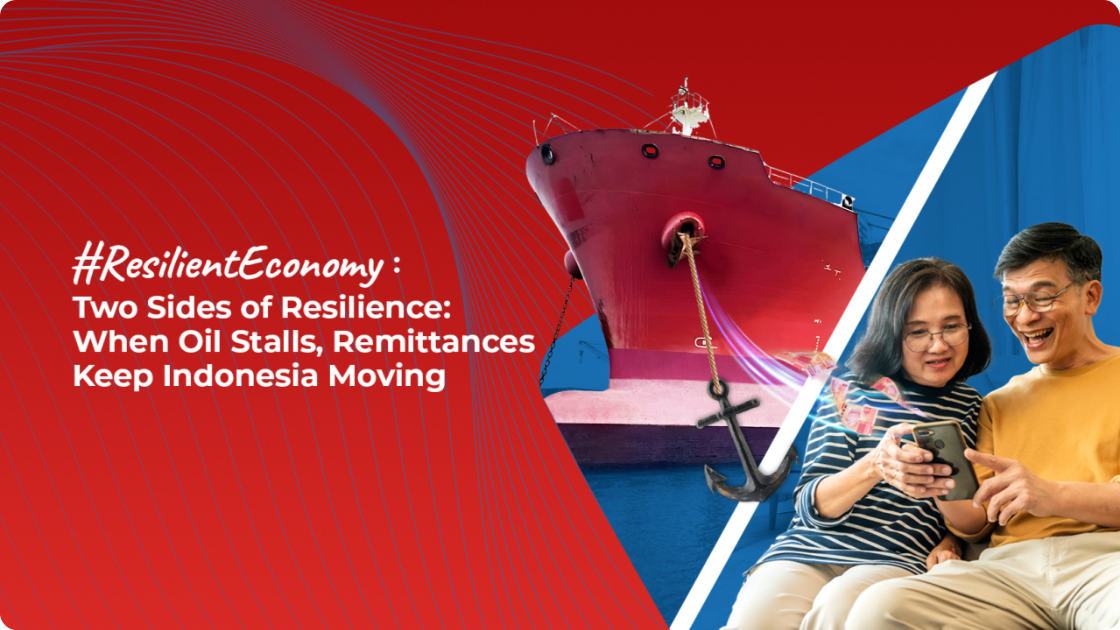
Two Sides of Resilience: When Oil Imports Stall, Remittances Flow

Dian once thought of Shell’s red-and-yellow logo as a shorthand for certainty. The stations glowed at night, the pumps ran, engines lined up, and life kept moving.

But certainty, like fuel, can evaporate quickly. However, when we catch up with the news, they’re all telling different story: global giants find themselves waiting at the port, caught in the slow tide of import approvals.

Indonesia, an energy-hungry archipelago, get the aftershock. When oil shipments hesitate, the economy shudders — from trading floors in Jakarta to motorbike queues in small towns.

What does resilience look like when global flows falter?

Two Sides of Resilience: When Oil Imports Stall, Remittances Flow

Share:

instagram

Side One: The Corporate & Trade Lens

For multinationals, the delay is more than paperwork. It means volatility seeping into supply chains. Prices that spike without warning. Balance sheets tilting as logistics falter and trade deficits widen.

The truth is stark: when a tanker stalls, the ripple can reach every ledger, from exporters to corner shops.

Side Two: The Human & Remittance Lens

And yet — while ships wait at harbors, another current keeps moving. Remittances.

Unlike commodities, they don’t depend on geopolitics or import windows. They travel on the strength of people — millions of Indonesians working abroad, sending money home.

Every transfer is a lifeline:

Rice on the table, tuition paid, roofs repaired.

A steady drip of foreign exchange that cushions national accounts.

A form of resilience that is not abstract, but lived daily by families.

In quiet contrast to oil, remittances don’t wait for approvals. They arrive.

Beyondtech’s View

At Beyondtech, we see both flows clearly. Energy imports remind us that economies cannot anchor themselves only on commodities. Remittances remind us that resilience is written not in tankers, but in the hands of people.Our work is to strengthen that second current — ensuring every remittance is faster, safer, and free of hidden costs. So when the global economy shakes, families stand steady.

Looking Ahead

Indonesia’s economy will always depend on two rivers of resilience:

The large, visible stream of oil, gas, and mineral shipments.

One is shaped by corporations and policy. The other is powered by people.

Together, they define how steady Indonesia can stand in uncertain times.

👉 With Beyondtech’s remittance network across 60+ countries, families can send and receive money with no hidden fees and same-day arrival. 📩 Chat with @askkartini today — because resilience has two sides, and every transfer counts.

Similar News

Read more news related to this topic.

Two Sides of Resilience: When Oil Imports Stall, Remittances Flow
Remittance

29 Agustus 2025

Two Sides of Resilience: When Oil Imports Stall, Remittances Flow

Dian once thought of Shell’s red-and-yellow logo as a shorthand for certainty. The stations glowed at night, the pumps ran, engines lined up, and life kept moving.But certainty, like fuel, can evaporate quickly. However, when we catch up with the news, they’re all telling different story: global giants find themselves waiting at the port, caught in the slow tide of import approvals.Indonesia, an energy-hungry archipelago, get the aftershock. When oil shipments hesitate, the economy shudders — from trading floors in Jakarta to motorbike queues in small towns. What does resilience look like when global flows falter?
Read More
The Human Truth About Pay Rise and Remittance
Remittance

29 Agustus 2025

The Human Truth About Pay Rise and Remittance

Conversations about salary adjustments in governance often capture attention, but their impact is naturally limited to a small circle. These changes, while important within governance, tend to serve only a limited circle. By contrast, the remittances sent home by Indonesia’s global workforce,our migrant workers represent collective power that directly fuels communities and households across the nation.
Read More